Wednesday, October 18, 2017
Every Ruin has a story to tell: Sunplay at Sun Temple in Modhera, Gujarat

Virtual Traveling of Dunda in Uttarkashi - Captured in 5 picturesque photographs
How to Get to Dunda:
Dunda is around 130 - 140 kms from Dehradun. Generally its takes 4-5 hours to reach from Dehradun in a car. Uttarkashi is further 30 kms ahead of Dunda. Private shared taxis and buses also ply on this route.The drive to Dunda gets very interesting from Chinyalisour with the Bhagirati River flowing beside the road. It was raining lightly during the time we visited and the view was breathtaking, which I am sharing with you all below.
 |
| Chinyalisour with Bhagirati River |
Dunda:
The inter road connectivity in Uttarkashi district is poor however Dunda actually come before Uttarkashi and is the sub-district headquarter, so is an important junction. Road condition apart from the main highway NH-108 are not be trusted on. Landslides during the monsoon months are normal. GREF personals and other villagers themselves keep a tight vigilance so that no roads are blocked. |
| NH-108 |
Jineth:
Jineth is a beautiful village south of Dunda around 20kms towards Brahmakhal on NH - 94. One has to walk uphill for 3 and half kms cross many streams and bridges from the point show in the picture. Normally takes 1 and half hour for a person with normal fitness. The village is very cosy with all the house together in a cluster. |
| Jineth |
Kalyani:
Kalyani is around 16 kms from sub-district headquarter, Dunda. Situated besides NH - 94, villagers are very thankful to the government for opening a PHC in the village. Also has a senior secondary school nearby which makes the children very happy as they get extra time to play and time is not lost due to the travel to school. |
| Kalyani |
Nagal:
Nagal is a famous village as it boasts of Prikateshwar Siva Temple. Nagal is situated on NH - 94 around 30 kms away from Dunda. Its is believed by the local villagers that Lord Shiva had given a visit to this village during early times and since then temple is dedicated to Lord Shiva and other Hindu god and goddess. |
| Prikateshwar Siva Temple |
Nagal Rice-fields
Nagal is also famous for good quality of rice produced. On interacting with the pradhan it was known that earlier around 60% of the rice produced in the fields were exported outside and sent to other parts of India. However, over the years there has been a downward trend and now only 10% of the rice produced are sent outside of Nagal village. |
| Nagal Village Rice-fields |
Celebrating the Wangala Festival in Meghalaya's Garo Hills
In October, I put on magic shoes and travelled to Tura, in the Garo Hills of Meghalaya, to celebrate Wangala aka the Hundred Drums Festival. A celebration of the annual crop harvest and the charming way of life in the northeastern Himalayas, Wangala sees the coming together of tribal groups to pay ode to their chief divinity, the Sun god.
People young and old dress in their colorful garments and do'me (feathered headgear) and dance to music played on long, oval-shaped drums; one of the grandest fiestas for the folks of Meghalaya.
Thanking the tribal gods
The Wangala begins with Rugala, a ceremony in which thanks is given to seek communion with the tribal god Misi-Saaljong. The Garo people depend on agro-economy and don’t use any agricultural products before thanking the god of fertility. The Nokhma (chief of the village) takes part in every rite and ritual of the ceremony.
Melodies from buffalo horns
Since the time music and dancing found a place on earth, they have become a way of life for the tribal Garo people. At Wangala, they perform the Katta Doka (talking in a sing-song voice), Ajea, Dani Doka (describing Wangala in songs), Chambil Mesaa and the Pomelo Dance. The indigenous songs sung by the ladies are known as Ahaiya, in which they exchange views and ideas, and express love and gratitude towards their neighbours. What stands out among instruments like flutes, drums, gongs and nagatik, is the melody of ancient flutes made from buffalo horns.
Dancing inspired from wagtails
 |
| People young and old dress in their colorful garments and do'me |
Thanking the tribal gods
 |
| The Nokhma (village chief, centre) takes part in the thanksgiving rituals |
Melodies from buffalo horns
 |
| Buffalo horn turned traditional flute |
Dancing inspired from wagtails
 |
| Wagtail-inspired dance |
Believe it or not, the Wangala dance is inspired by the wagtail bird! The musical instruments imitate sounds the wind makes when it blows through bamboo holes and rustles the leaves of aromatic plants, while the Garo women folk gesture and clap.
To the beat of 100 drums
 |
| Hundred drums and music |
A group of 30 dancers with ten drums form a contingent, and come together as a whopping 300 dancers with hundred drums (hence the name Hundred Drums Festival). The Hundred Drum dance is held on the last day, with women and men dressed in their traditional attires. The dancers and drummers sing, play, sway, make music and celebrate in one grand ritual.
Making merry with home-brewed rice beer
 |
| Wangala festivities |
Preparations for the Wangala festival take place well in advance, starting with the collection of various local foods. Locally home-brewed rice beer is an integral part of the ceremony, both for locals and as an offering to outsiders attending the festival. What better way to make merry the way the locals do?
VLog:
Saturday, May 28, 2016
Rendezvous at Khanna Village in Mori, Uttarkashi
Khanna is a small village of total 40-50 Households in Mori block of Uttarkashi district with around 30 families living at present. This village is tucked away in north west part of Govind Pashu VIhar National Park and Sanctuary. To reach to this destination, its takes 2-3 hours drive to reach from Mori. The village in on the Daula - Jakha road and people have to get down at Doni to reach to this village. From Doni its another 1 hour walking where one has to cross a river and then start a uphill climb for 30-40 minutes to reach to this village.
 |
| Village of Khanna has total 30 - 40 households |
As you reach the village you one can have the first glimpses of the village temple and a tremendous view of the Rupin River flowing below followed by it which will certainly freshen you up and the tiredness of climbing up will go away.
 |
| Village Temple will greet you at the entrance of village |
 |
| View of River Rupin flowing |
The village has no electricity and people are using solar powered setups for their electricity needs. This village was effected during the 2013 Uttarkashi Disaster with landslides coming from top of the mountains destroyed their semi-pacca houses. As informed by Sarpanch of the village Smt. Gyan Mala Devi, many families of the village has received the compensation under the Uttrakhand Disaster Recovery Project. There is only one school near Khanna where all the children go for studies. PS Khanna school located in Doni was established in 1989 however till now this school has classes till 5th Standard only. Most of the locals living here depend on local vegetation including fruits and vegetables. All the families have their farms on top of the cliff which is another 2 hours walking from the village. We rather choose not to go ahead and stop at the village itself.
 |
| Sunil Singh is student of PS Khanna School |
The temperature through the year is pleasant with winters a bit chilly and occasional snowfall in the months of December-January are common. As the evening was setting in the chillness in the air could be felt. The Sarpanch of the village and her family were a little bit concerned that we would be returning the same day to Mori as the sun was already started going down.
So without much of delay we started our dissent which is much easier than climbing up. We could reach to our vehicle parked at Doni by 6.00 pm and were back to Mori by 9.00 pm.
Tuesday, January 12, 2016
Similarity of Modern Science and Vedic Cosmology
Today on National Youth Day - "We are what our thoughts have made us; so take care about what you think. Words are secondary. Thoughts live; they travel far".
~Swami Vivekananda
The similarity of Modern Science and Vedic Cosmology
Quieting down of the universe is not simultaneous over the whole of the universe and that in different parts different things going on. But the principle remains the same, that all we see, that is - nature herself - is progressing in successive rises and falls. The one stage, falling down, going back to balance, the perfect equilibrium, is called Pralaya, the end of a cycle (The peak of the curve). The projection and Pralay of the universe have been compared by theistical writers in India to the out-breathing and in-breathing of God. God as it was breathing out the universe and it comes into Him again. Swami Vivekananda preached the basis of modern cosmology to the west before they were known to modern science. He openly declared to the spectators in America long back in 1893 at his speech in Chicago of Big - Bang theory that the whole universe is contracting and expanding. The scientist - philosopher Einstein had the idea that the universe was in the static stage. But he was so great that he had ultimately agreed to the views of the Hindu Sage and accepted that it was his gravest blunder in his lifetime. It was also known to the Hindu sages thousands of years back that the universe took birth 1500-2000 billion years back. The universe was never created. It is only projected. Truth is eternal. An extract on the similarity of Modern Science and Vedic Cosmology.#swamivivekanandajayanti
#swamivivekananda
#swamisamarth
#indianmonk
#guru
#youthleader
#like4likes
#likesforlike
#followforfollowback
#followme
#followers
#modernscience
#vedas
#pralay
#endofcycle
#einstein
#einsteinstring
#manifestation
#stringtheory
#superstringtheory
#meditation
#metaphysical
#enlightenment
#spiritualgrowth
#spiritualhealing
#spiritual
#spiritualawakening
#technologyofspirituality
#ToS
Sunday, March 30, 2014
'Clear Pop's Up'
 |
| 'Clear Pop's Up' |
Do you often experience mental chatter going on in the back of your mind, but every now and then something 'Clear Pops Up' that tells you to do this or that? When you follow those 'Sixth Sense,' they usually pay off. Sometimes though, you don't follow your hunches and later you wish that you had.
This process of listening to and following your hunches simply amounts to capitalizing on the preconscious thought processes that comprise your intuitive level of thinking.
Exercise this practice and be aware of this powerful state on a daily basis. Sometimes you may have a momentary flash of insight during the day and without even trying to do anything you will have a fore telling vision of future events.
The more you tune into your 'Intuition' the easier the process becomes. Eventually you will learn to rely more and more on your intuition before making any important decisions.
Sunday, February 23, 2014
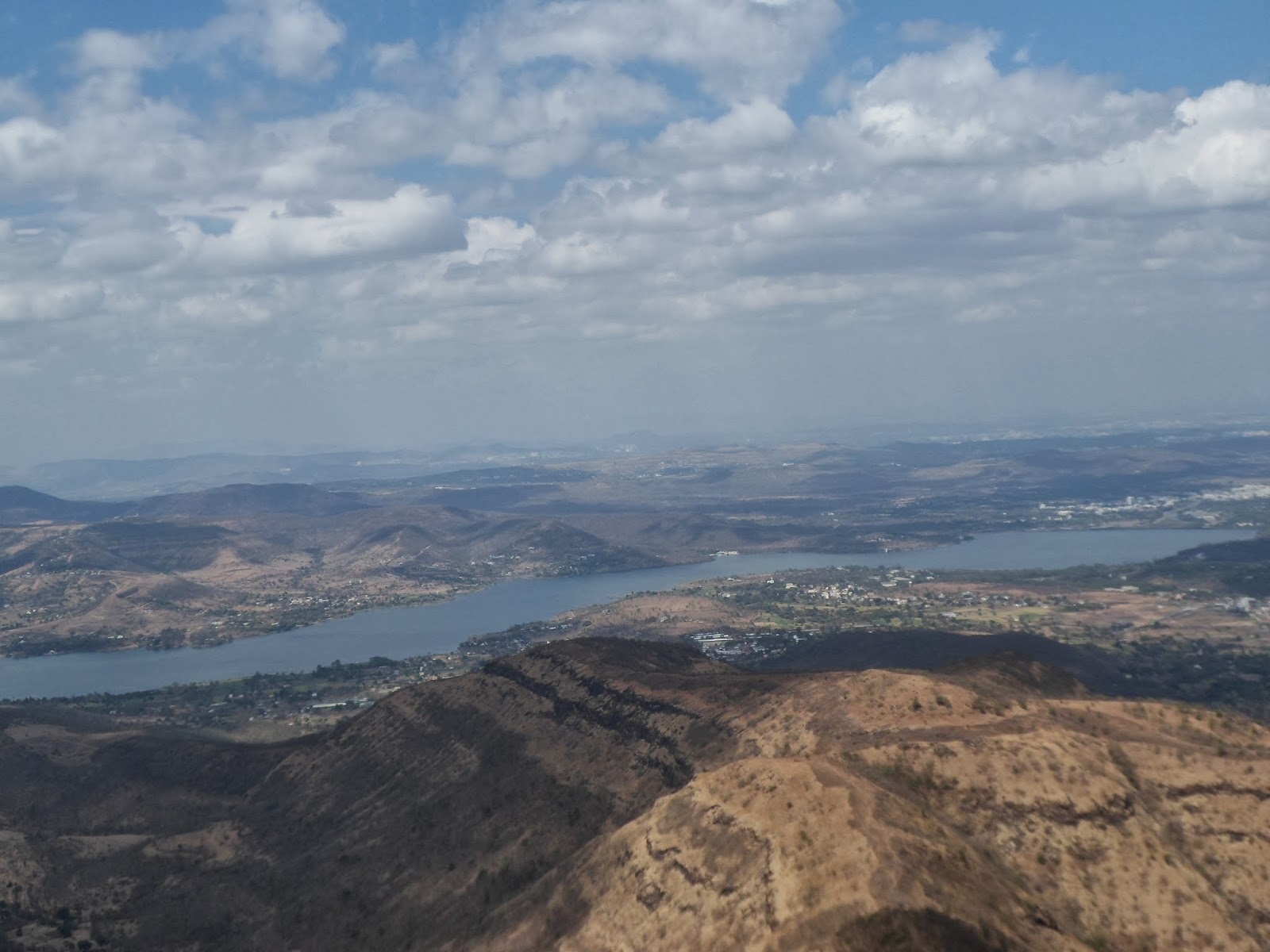
Sinhagad Fort in Pictures
This weekend was probably a different one for me; a long awaited reunion with my family here in Pune.
My father is visiting Maharashtra for the third time during his lifetime and he is still active like a youngster to explore serene places. I realized that, after he went ahead leaving all of us behind during the small trek up to Sinhagad fort.
This was my second visit to this beautiful spot which is around 30 kms from Pune. My first visit to Singhad fort- which stands perched on a isolated hill of the Bhuleswar range of the Sahyadri Mountains is penned down as 'Travel with Time' which was during September 2012.
Thought not the best time to visit the fort, however the company along and the lip-smacking dishes like Pithle-Bhakari, Kanda Bhaji and Sweet curd in earthen pots made the trip worthwhile.
Below is visual treat of Sinhagad Fort :
(1)
 |
| Pune city on the horizon (2) |
 | ||||||||||
| Sahyadri hills - lush greenery missing (3)
|




Subscribe to:
Posts (Atom)
Smokey Mountains View from New Tehri of Tehri Range, Uttarakhand
One of the most memorable places where I have stayed for a month or so. In a small but busy hilly town, New Tehri in Uttarakhand. All the vi...

-
One of the most memorable places where I have stayed for a month or so. In a small but busy hilly town, New Tehri in Uttarakhand. All the vi...
-
 Khanna is a small village of total 40-50 Households in Mori block of Uttarkashi district with around 30 families living at present. This vi...
-
Date of Trek: 16th August 2018 Paro Takstang also popularly known as Tigers Nest is located near upper Paro Valley in Bhutan. Started...

